Follow ICTMJC on Social Media
Subscribe to Our Newsletter

Can the Weather Give You a Headache? What the Research Says

Can the weather give you a headache? Cover showing a barometer beside the title, for a post on weather and headaches

The short answer: they're linked

After my post on weather and joint pain, I asked myself next: can the weather give you a headache? So we went looking. The research says they're linked, and more clearly than for joint pain. A review of 31 studies found that temperature and air pressure were both linked to migraine attacks (Li 2025).

Continue reading

Can the Weather Make You Hurt? What the Research Says

Can the weather make you hurt? Cover showing a barometer beside the title, for a post on weather and joint pain

The short answer: partly true

If your knee or back seems to know a storm is coming before the forecast does, you're in good company. In a study of older adults with osteoarthritis in six European countries, two out of three said the weather affects their pain (Timmermans 2014).

Continue reading

Understanding Muscle Trigger Points: A Patient Guide to Trigger Point Pain, Treatment, & Recovery

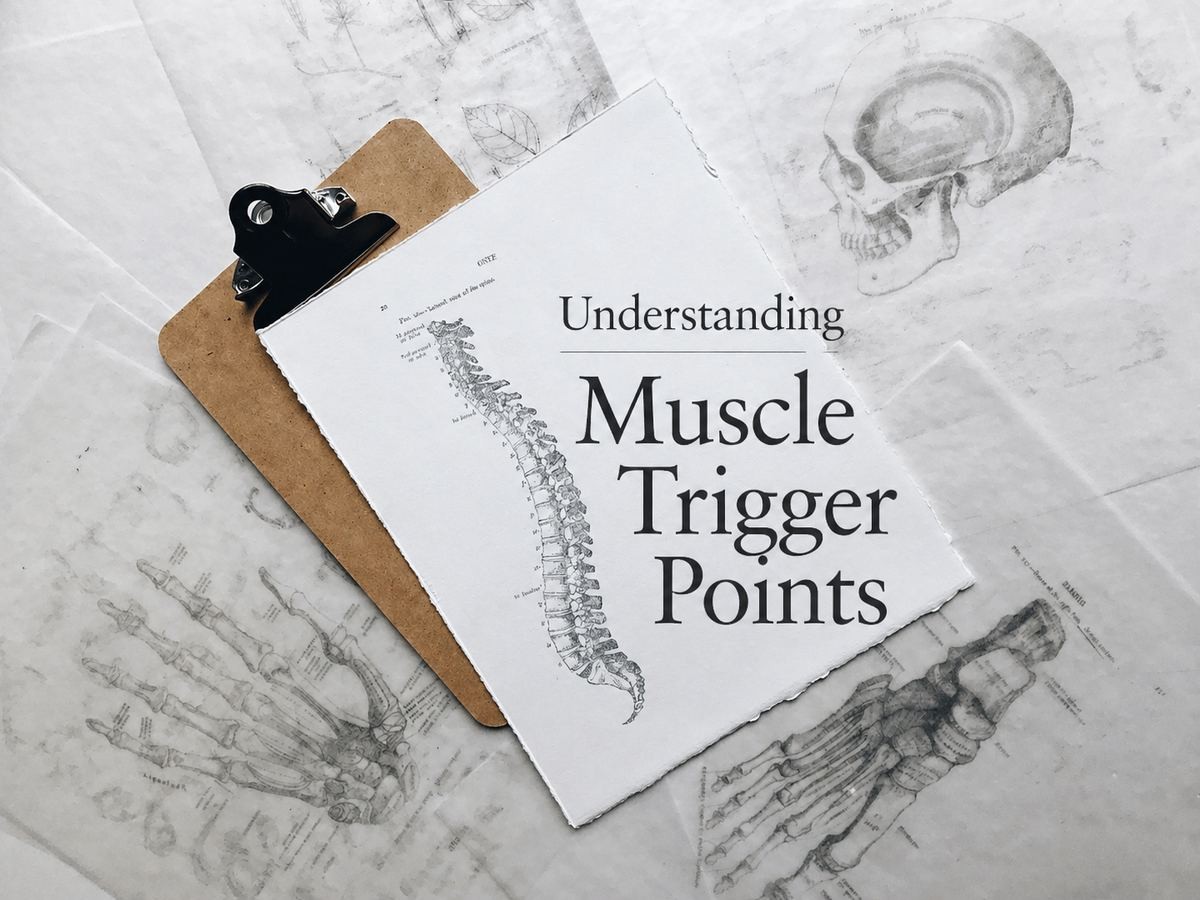
understanding-muscle-trigger-points-blog-cover

What is a Trigger Point (TrP)?

A trigger point, or myofascial trigger point, is simply a knot in a muscle or myofascial unit. Trigger points are quite common and are hyper-irritable spots within and between tight muscle(s) and supporting fascia. When pressed – or sometimes when at rest – trigger points can produce a local or referred pain (pain felt in another area of the body), tenderness, and restricted movement. There are two types of trigger points – latent, and active trigger points.

Continue reading

Sports Physical Time!

Another summer has flown by and classes are starting! This may also mean your child may be needing a sports physical for their upcoming sports season. Schools require this as Kansas state law wants them to pass a physical exam prior to participation in their sport(s). 

Continue reading

Are Your Current Health, Wellness, and Fitness Routines Helping your Ultimate Goals?

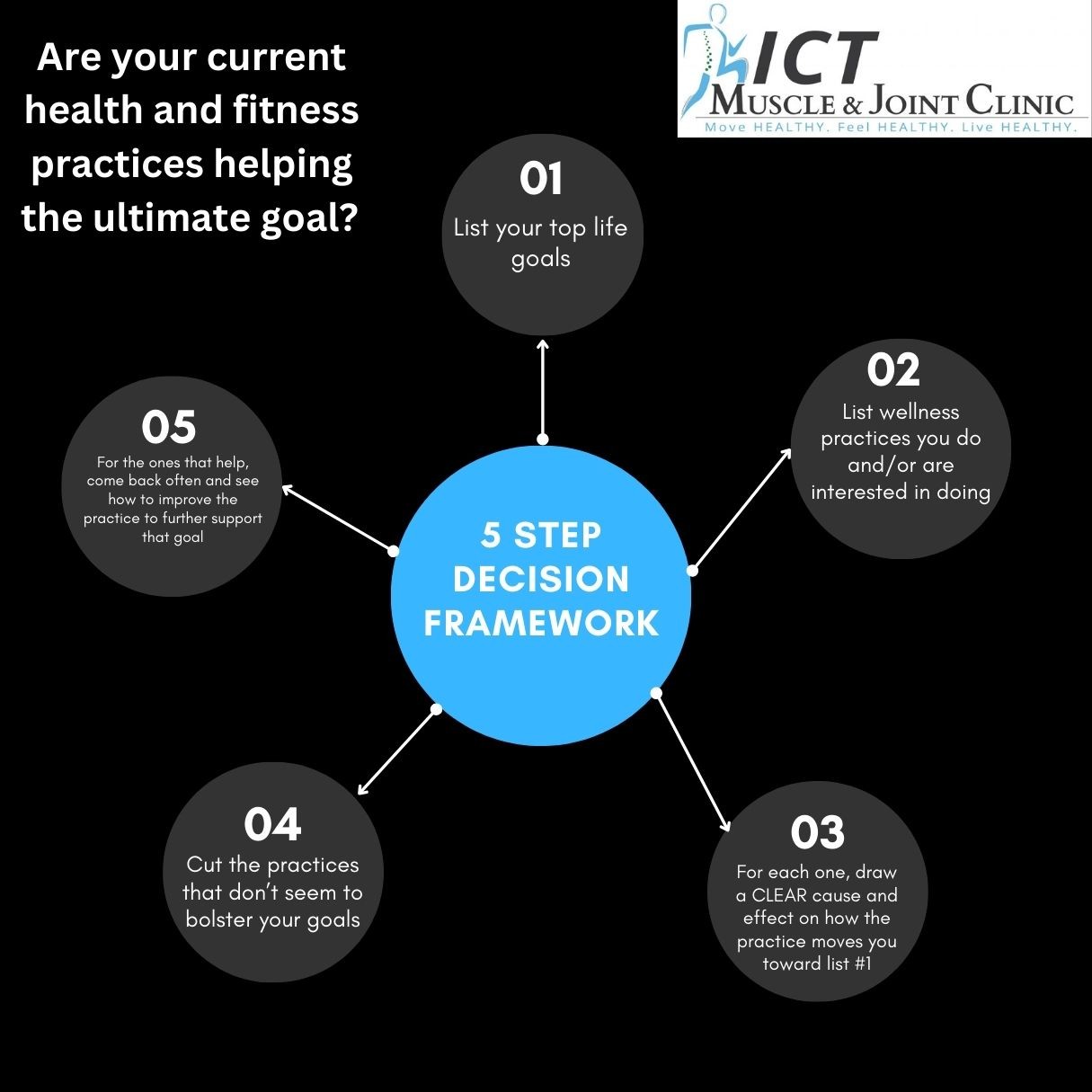
5-step-decision-

Using Health Routines to Reach Your Ultimate Goals

I will start off by saying this blog can be interpreted in three ways. Also when I say routines and practices, I mean things outside the basics. We all know exercise, sleep, nutrition, purpose, strong relationships, and stress management are vital. Doing those basics well, consistently, can already have a massive impact on your life. So with that in mind, here are the three lenses from which this blog can be interpreted though:

Continue reading

Is Being "Healthier" A 2023 Goal? Then Read This.

7-pillars

The Seven Pillars of Health

If you’re like the average American, you probably already failed your New Year’s Resolution. If one of your goals was to be more “healthy,” it might not even be your fault that you’ve already failed; this is because we don’t have an accurate description of “health.” How is it measured? What goes into being "healthy?"

Continue reading

Monthly Movement: How Much Does Sleep Matter?

Add-a-subheading-10

December Movement Newsletter

We are in the end of fall season and winter starting soon which means the weather gets colder and makes for prime napping. This gets us on this month’s topic: sleep. As many of you have seen, when you fill out intake paperwork with us there are questions on sleep. We know that a main question that may pop in your head can be: “how can sleep relate to my pain and overall health?” We want to answer that as well as give you a few tips we like to use to help address sleep issues you may be having.

Continue reading

Headaches? Give Chiropractic a Chance!

headache

A Complicated Condition

One of the most debilitating complaints we will see in our office is headaches. This can either be from the intensity, duration, or both. The location can also be variable from person to person, with correlating jaw or neck pain not uncommon. We usually see a combination of these complaints as compounding factors that overlap each other, with each one needing to be addressed to help the patient best.

Continue reading

Why Most Goals Fail and How it Relates to Your Pain

_20210813-163453_1

"Knowledge is, by far, the most powerful tool to treat and cure pain. More powerful than any pill." - Dr. David Butler, author of "Explain Pain".

Continue reading

Three Tips to Help Prevent Running Injuries

IMG_6926

About half of the running population is thought to be injured at some point in one year. These “are defined as any damage or disorder that causes significant change or even cessation of ones normal running routine.”(1) So why is this so common? Although there will never be any solution to completely prevent pain, we can try to limit the likelihood and even the severity of the running pain with the following tips. (Additionally, this may focus on our demographic of runners, but some of the same concepts can apply across all spectrums of athletics).

Continue reading

Mechanical Diagnosis & Therapy: One of the Most Powerful Assessment and Treatment Systems for Pain in the World

Image-1

What Is Mechanical Diagnosis & Therapy (McKenzie Method)? 

An internationally researched system of assessment and rehab for spinal and extremity musculoskeletal pain. Clinicians that have training in the Mechanical Diagnosis & Therapy (MDT) system are able to assess, classify, manage, and properly refer out when indicated for all complaints of the musculoskeletal system. This means that if a pain complaint is coming from the spine, extremity joints, muscles or tendons, then a MDT evaluation is appropriate. A clinician with MDT training will be able to identify what management strategy is best and outline a predicted recovery plan. All using movement and patient education as a guide toward self management.

Continue reading

Treatment and Rehab at the Ankle for Plantar Fasciitis

Plantar-Fasciitis-Exercise---Part-2

The Ankle and Plantar Fasciitis

Limited Ankle Dorsiflexion (foot going toward shin) is shown to be a low to moderate risk for developing plantar fasciitis. Why? Our body is incredibly smart and even when it is lacking joint range of motion in the ankle it will still accomplish the task at hand like running, squatting, lunging by compensating and increasing strain up and down the chain. This commonly means increased demand and force placed upon the plantar fascia over time.

Continue reading

Treatment and Rehab at the Foot for Plantar Fasciitis

just-1

Treatment and rehab for plantar fasciitis can involve everything from foot, ankle, hip, and core based on your individual presentation. We will start from the bottom and move on up in an succeeding blog.

Continue reading

Is it Plantar Fasciitis?

just

Many times, pain in the bottom of the foot or heel can be pushed into a blanket diagnosis of “you have plantar fasciitis”. But is it plantar fasciitis? Could it be another condition like tibialis posterior tendonitis, stress fracture in the heel, radiating pain from the low back? While getting a blanket diagnosis of plantar fasciitis based on zero exam with some basic rehab and soft tissue techniques thrown at it may work, there is a good chance it probably will not. You must know what you are aiming at. And in the same boat, what is causing the plantar fasciitis? Just because there is pain and inflammation in the plantar fascia does not mean that the CAUSE of the pain is coming from that area as well. In fact, it rarely does. This is why seeking out help from sports chiropractor or physical therapist is important to get a proper diagnosis and most importantly find out the main cause of the pain.  

Continue reading

The Rehab Teeter-Totter

Rehab-Teeter-Totte_20201123-192342_1 The Rehab Teeter Totter

Understanding Pain

When patients present with pain, we can usually put each patient in one of two categories: they weren’t doing enough activity, or they were doing too much. Let’s give you two examples. The most obvious is in the springtime, when the weather is nicer, people will take up running; but this is after not running for months because of the season and weather. When the person tries to run the same amount of miles, or as fast as they did prior to their hiatus, is when they get in trouble. This is a simple case of "too much, too soon": the amount of excessive load on the tissues causes strain and will send a signal to the brain for help because something is wrong.

Continue reading

Stress Loading Patient Handout

Stress loading is use of active traction and compression exercises to produce stress in the extremity with minimal motion of the painful joints. Stress loading follows the basics of exercise physiology: Your body adapts in response to demands placed on it. Your response to pain has been changed, so now any stimulus is interpreted as a painful stimulus. Stressful exercise is needed to override what has become "abnormally normal" for that area. An overload is required to achieve a training effect and to break the pain cycle that you and your body are experiencing. This means you need to do something to overload your neural, vascular, sensorimotor, and musculoskeletal systems to break the existing pain patterns your body is feeling.

Continue reading

Overuse Pain Patient Handout

WHAT IS OVERUSE PAIN?

Overuse pain is one of the most common forms of musculoskeletal pain. Muscles and joints of the body do not receive proper blood flow or oxygen. The lack of oxygen allows acid and chemicals to build up in the muscles and joints, causing local tissue irritation and pain.

Continue reading

Top 4 Reasons Why I Should Seek Help from a Chiropractor

I am always asked “When should I come see you” or “When should I see a chiropractor”. These questions are not always clearly outlined by the chiropractic profession. If you ask 5 different chiropractors and you’ll probably get 5 different answers. For this blog, let us tackle “When should I see a chiropractor” based on my symptoms.

Continue reading

What Should I Do When a Movement or Activity is Causing Me Pain? Let the Stop Light System Be Your Guide

Traffic-Light-

PAIN GUIDELINES

First off it has to be said, if you have a NEW INJURY that is causing pain and is not getting better with any techniques you are doing at home please see a rehab specialist as soon as possible to get it assessed. Grinding through pain in workouts and daily activities is not normal. Also if you start to notice a decrease in range of motion in a joint during a workout or daily activity that is not getting better, please take note. Pain is usually the last thing to come on. We can save a lot of aches and pains and  speed up the rehab process if these things are accessed early and not looked at until you are in unrelenting pain.
 
Now for this post we are talking the rehab process of an injury AFTER it has been accessed and serious red flags have been ruled out. Meaning we have a plan and are on our way to healing the injured tissue. So the questions become in this process: Should I avoid all movements that are painful? When should I stop doing an activity if it is painful? Let the stoplight system be your guide.

STOP LIGHT SYSTEM TO PAIN 

Remember: Hurt does not always equal harm.

RED LIGHT:   

1. Major loss in range of motion or strength  (more than 50%)  after doing an activity.
2. Pain increases during activity
3. Lingering pain (not workout soreness) that last several days after doing an activity.
 
Action Plan: STOP THE ACTIVITY THAT CAUSED IT and seek medical advice from your rehab professional.

YELLOW LIGHT:

1. No change in range of motion, strength, and function.
2. Pain spikes during the activity.
3. Pain persists AFTER activity by 3 numbers (ex: 2/10 to 5/10) for more than couple hours or you wake up the next day and is still spiking.
 
Action Plan: Remember a flare up in pain does NOT equal harm. It is a part of the process and it just means too much too fast. Take note and stay course with normal activity. Avoid increasing activity (speed, load, volume of an exercise) or adding any new activity. If same pattern continues the next time, decrease activity by 50% (load, sets, reps, duration, speed) and go back and see if persisting pain decreases. If it is better then stay there for couple days and then increase activity gradually again. If it is not then consult your rehab professional.

GREEN LIGHT:

1. No change in range of motion, strength, and function.
2. Pain spikes during the activity.
3. Pain is no worse after activity and back to baseline after few minutes.
 
Action Plan: Stay the course. Be confident and gradually load and challenge the tissue more and more over time.

HOW ICT MUSCLE & JOINT CAN HELP YOUR PAIN

 Here at ICT Muscle & Joint in Wichita we have techniques like chiropractic adjusting, dry needling, IASTM, and cupping to help relieve pain a little bit, but all that is a means to get you moving and get you strong again. We use this stop light system to help guide you to being more resilient and come out of any injury being more educated and stronger than before.

References: "A World of Hurt: A Guide to Classifying Pain" 

Continue reading

Injury and Rehab Confusion

Picture1

There are a lot of misconceptions and confusion that come with rehab and recovering from an injury. Some common questions we have pop up or know people are wondering are: why am I having to do exercises at home? Can’t you just “fix” me with your treatments at your office?  Why I am doing these low-grade rehab exercises at the beginning? Why am I continuing to come and progress with exercises if I am out of pain? These are just to name a few, and we will try to answer each as best we can.

Continue reading